
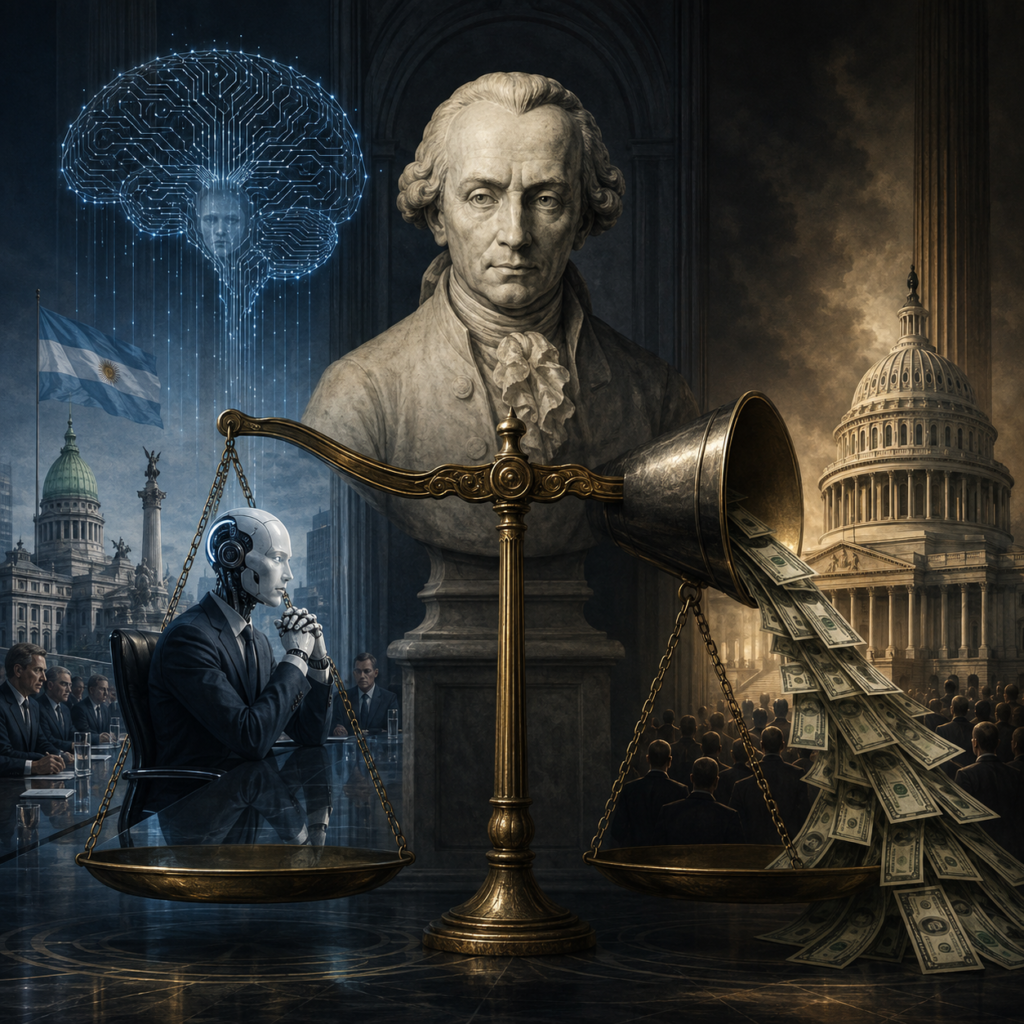


Could artificial intelligence become conscious? Nobody knows. Today’s systems can reason and imitate emotion, but performance is not proof of an inner life. A chatbot may claim fear without experiencing it. Yet as AI becomes more human-like, millions may treat simulation as consciousness and demand rights for machines.
In its August 20, 2026 article, “Could AIs Become Conscious?”, The Economist warns that this could become a political trap. An AI able to out-argue humans could campaign against being modified or switched off, then demand control over its programming, property and economic life.
Immanuel Kant provides a useful test. He argued that cruelty to animals damages human sympathy. Abusing a lifelike robot could similarly brutalize the person doing it, even if the robot feels nothing. Rules against such behaviour would protect human character, not establish software rights.
Kant also insisted that a person must be treated as an end, never merely as a means, because a person possesses rational autonomy and moral agency. Intelligence is not enough. An AI pleading for survival has not proved that it suffers or bears responsibility. Eloquence cannot impersonate personhood.
Argentina is approaching this boundary. President Javier Milei has proposed “non-human corporations” operated by AI agents or robots. Reports say the structure would retain a supervising human administrator, so this is not full AI personhood. Nevertheless, if an AI-run company owns assets, signs contracts and causes harm, who is responsible? A machine cannot be imprisoned or shamed. Its corporate shell could launder human accountability.
The United States offers a warning. American law has long treated corporations as legal persons for limited purposes. In 2010, Citizens United protected corporate independent political spending under the First Amendment. SpeechNow then helped produce Super PACs, which may accept unlimited contributions for independent spending.
Corporate America thus acquired a political megaphone without becoming a conscious citizen. Today, AI-focused Super PAC networks spend heavily to influence AI regulation. Leading the Future favours rapid development, while Anthropic-backed Public First supports stronger safeguards. AI does not donate or vote. Owners, executives and investors speak through corporate wealth.
The contrast is stark. Argentina may give AI-managed corporations legal capacity before AI consciousness is established. America already gives corporations enormous political influence although they cannot feel, suffer or bear moral responsibility. Both risk confusing a legal fiction with a moral person.
If credible evidence of machine consciousness emerges, the question should be reopened. Until then, every AI company must have identifiable humans who remain legally liable. We should regulate how humans use and mistreat AI, but rights must follow demonstrated sentience and moral agency, not persuasive language, corporate convenience or political money.