

By Simon Yammine
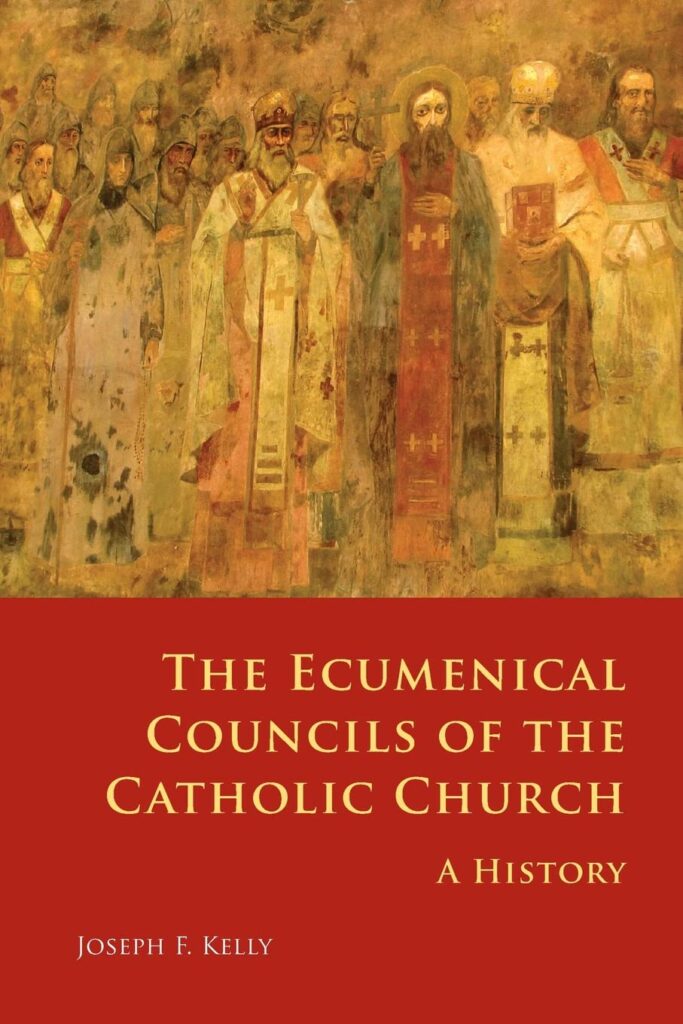
Joseph F. Kelly’s The Ecumenical Councils of the Catholic Church: A History explains the twenty-one councils that the Roman Catholic Church recognizes as ecumenical. An ecumenical council means a universal council: a major gathering of bishops meant to speak for the whole Church. The word comes from the Greek idea of the oikoumene, meaning the inhabited world. In Catholic teaching today, such a council must be connected to the pope and approved by him. But Kelly shows that the history is more complicated. The earliest councils were not called by popes. They were called by Roman or Byzantine emperors, and they happened mostly in the Greek-speaking East, not in Latin Rome. This is one of the most important lessons of the book: the Catholic Church’s structure developed over time, and the early Church did not operate exactly like the modern Catholic Church.
The first eight councils were held in Greek-speaking regions and conducted in Greek. This matters because many people imagine Church history as mainly Roman, Latin, and papal from the beginning. Kelly corrects that idea. The earliest councils belong to the shared history of Catholics, Orthodox Christians, and other ancient Christian traditions. They happened before the full split between Eastern and Western Christianity. The Greek-speaking East gave the Church many of its most important theological words, including homoousios, ousia, and hypostasis. These words sound technical, but they were used to answer very practical questions: Who is God? Who is Jesus Christ? How can Christians worship Jesus while still believing in one God?
Kelly explains that councils usually happen during crisis. The Church does not call an ecumenical council because everything is calm. Councils happen when a problem becomes too serious to ignore. Sometimes the problem is doctrinal, meaning the Church must clarify what it teaches. Sometimes it is political, because kings, emperors, or governments interfere in Church life. Sometimes it is moral or institutional, because the Church needs reform. Councils are therefore not just peaceful theological meetings. They are moments when the Church is forced to argue, define, correct, and decide.
The book also explains the magisterium, which means the Church’s official teaching authority. The episcopal magisterium refers to the teaching role of the bishops. In Catholic belief, when bishops gather in an ecumenical council in union with the pope, their teaching has the highest authority in the Church. This does not mean every discussion or political move during a council is perfect. It means the final doctrinal teaching, when properly approved, is treated as authoritative for Catholics.
A major theme in the book is the development of doctrine. This means Church teaching can become clearer over time. It does not mean the Church simply changes one belief into the opposite belief. It means that new questions force the Church to explain old beliefs more carefully. Kelly uses the example of original sin, the belief that human beings are wounded by sin and need God’s grace. Augustine of Hippo gave the classic Western explanation of original sin. Later, the Church moved away from the harsh idea that all people are born already damned, while keeping the deeper belief that humanity needs divine grace. Kelly also discusses the abandonment of limbo, an old theory about unbaptized infants. Limbo was an attempt to solve a theological problem, but it was never the central point of Christian faith. The deeper belief remained: salvation depends on God’s mercy and grace.
Kelly also warns readers not to imagine that everything in Christianity was fully organized from the beginning. For example, the New Testament did not appear immediately as a fixed twenty-seven-book collection. The canon, meaning the official list of biblical books, took time to be recognized. Athanasius of Alexandria was the first known Christian writer to list the twenty-seven books of the New Testament exactly as Christians know them today. This matters because it shows that the early Church developed through time, debate, usage, and recognition.
The same is true of councils. Today Catholics assume an ecumenical council must be called by the pope. But Constantinople I in 381 met, made its decisions, and ended without informing the pope beforehand. Later, the Church accepted it as ecumenical. This shows that the authority of some early councils was recognized through later acceptance, tradition, and papal confirmation. The Church’s history was not as neat as later theology sometimes makes it look.
Kelly also explains the difference between mystery and heresy. In theology, a mystery is not just a puzzle waiting to be solved. A mystery is a truth about God that human beings can never fully understand. The Trinity is the best example. Christians believe God is one God in three persons: Father, Son, and Holy Spirit. The councils did not fully explain the inner nature of God. They gave careful language to protect what Christians believed.
The phrase faith seeking understanding is important here. Theology begins with faith, but then tries to understand faith more deeply. A theologian is not supposed to invent a new religion. A theologian tries to think carefully about what the Church believes. Heresy means a conscious rejection of an official Church teaching after that teaching has been clearly stated. This distinction matters because many early theologians were not trying to destroy Christianity. They were trying to explain difficult mysteries, but some explanations were later judged wrong.
The earliest Christians were Jews. They believed Jesus was the Messiah, or Christos in Greek, which is where the word Christian comes from. At first, many followers of Jesus thought the message was mainly for Jews. But Paul and other missionaries brought the message to Gentiles, meaning non-Jews. This created tension between Jewish Christians in Palestine and converts from the Diaspora, meaning Jews living outside Palestine. Around the year 50, the Jerusalem church held a council to discuss whether Gentiles could enter the Christian community without fully following Jewish law. This Council of Jerusalem was not an ecumenical council in the later Catholic sense, but it became an early model of Church leaders gathering to solve a major problem.
As Christianity spread through the Greco-Roman world, it had to speak in Greek cultural and philosophical language. The Roman Empire usually tolerated religions if they did not threaten public order. Kelly describes the Roman attitude as “Peace and Taxes.” In simple terms, Rome cared most about stability and revenue. Christians were sometimes persecuted, but not constantly everywhere. Many lived ordinary lives. Some even reached high levels of society.
Christianity also changed as Gentiles entered the Church. Ancient Jews were aniconic, meaning they avoided religious images of human beings. But Gentile Christians were used to religious art. Over time, Christian images became common. Greek philosophy also became important. Apologetics means the rational defense of faith. Christian apologists used Greek ideas to explain Christianity to outsiders. This helped prepare the Church for later councils, where Greek philosophical terms became necessary.
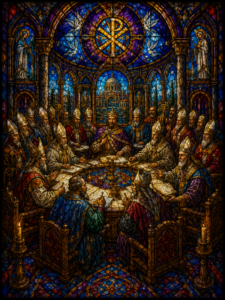
The first ecumenical council was Nicea I in 325. It was called by Emperor Constantine. Constantine had issued the Edict of Milan in 313, giving Christians freedom of worship. Later, he converted to Christianity. This changed the Church’s position dramatically. Christianity moved from being a sometimes-persecuted religion to a favored religion of the empire. But this created a new danger: the emperor now involved himself in Church disputes. Constantine wanted religious unity because he thought religious division could weaken the empire.
The major issue at Nicea was Arius, a priest from Alexandria. Arius taught that the Son of God was not eternal in the same way as the Father. His key idea was that “there was when the Son was not.” In simple language, Arius believed the Son had a beginning. He saw the Son as higher than all creatures, but still not fully equal to God the Father. This caused a crisis because Christians worshiped Christ. If Christ was not truly God, then Christian worship and salvation were at risk.
Nicea rejected Arius with the word homoousios. This means “of the same substance.” The Latin-related term is consubstantial. Both mean that the Son shares the same divine being as the Father. The word was controversial because it was not directly from the Bible and because some bishops feared it could confuse the Father and Son as if they were the same person. But the word was useful because Arius could not accept it. It forced the issue clearly: Christ is not a creature. Christ is truly God.
This is one of the most important lessons in the book. Sometimes the Church used technical language outside the Bible to defend what it believed the Bible taught. This does not mean the Church rejected Scripture. It means Scripture was being interpreted in different ways, and the Church needed precise language to prevent false interpretations.
Nicea also used canons, meaning official rules or ordinances. Canons often included penalties for disobedience. Councils did not only define doctrine. They also organized Church life. Nicea addressed issues such as Easter, bishops, ordination, and Church discipline.
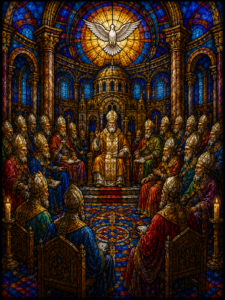
The familiar Nicene Creed was actually completed later at Constantinople I in 381. Nicea strongly defended the divinity of the Son. Constantinople I gave fuller attention to the Holy Spirit. The Church came to speak of the Trinity as one ousia and three hypostases. Ousia means substance or essence. Hypostasis means person. In simple words: one God, three persons.
Another technical idea in early Trinitarian theology is economic trinitarianism. Here, “economic” does not mean money. It comes from a theological use of the word economy, meaning God’s plan or activity in creation and salvation. Economic trinitarianism tried to explain the Father, Son, and Holy Spirit through how God acts toward the world. It was an early attempt to understand the Trinity, but later theology needed more precise language to protect the equality and distinction of the three persons.
The Council of Constantinople also created tension between Rome and Constantinople. It gave the bishop of Constantinople a place of honor after the bishop of Rome because Constantinople was the “new Rome,” the new imperial capital. Rome objected because Rome believed its authority came from Peter and Paul, not from political status. Constantinople’s rise helped create long-term tension between East and West.
The next major councils focused on Christology, which means the study of who Jesus Christ is. The central question was how Jesus can be both fully God and fully human. Some early Christians leaned too far in one direction. Docetism, from the Greek word meaning “to seem,” claimed that Jesus only seemed to have a real body. That denied his full humanity. Other views risked dividing Jesus too sharply into a human person and a divine person.
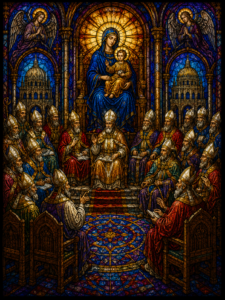
The Council of Ephesus in 431 dealt with Nestorius, bishop of Constantinople. Nestorius objected to calling Mary Theotokos, meaning “God-bearer” or “Mother of God.” This title was not mainly about Mary. It was about Jesus. If Jesus is one divine person, then the one born from Mary is truly God incarnate. Cyril of Alexandria strongly opposed Nestorius and defended the title Theotokos to protect the unity of Christ.
Kelly does not present Ephesus as a calm or noble meeting. It was full of rivalry, pressure, and political behavior. Alexandria and Constantinople were competing for influence. Church leaders used tactics that were not always fair. This is important because it shows that councils could produce important doctrine while still being very human and messy.
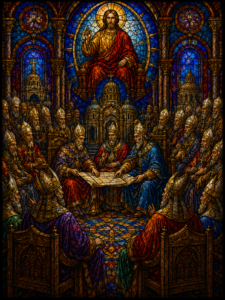
The Council of Chalcedon in 451 gave the classic Christian formula about Christ. It taught that Jesus is one person in two natures, divine and human. Nature means what something is. So Christ has a divine nature and a human nature. These two natures are not mixed together, but they are also not separated. This protected both truths: Jesus is fully God and fully human.
Chalcedon also caused division. Some Christians believed the council divided Christ too much. They preferred to emphasize one united nature after the Incarnation. This led to the growth of churches often called Monophysite, meaning “one-nature,” though that label can oversimplify their beliefs. The result was lasting separation between Chalcedonian Christians and many Eastern Christian communities.
The early councils show the strongest tension in the book. They produced central Christian doctrines, but they were surrounded by violence, imperial pressure, exile, betrayal, and political rivalry. Kelly’s point is not that doctrine is meaningless because politics existed. His point is sharper: Church history is both spiritual and human. The Church defined its faith through real historical struggles, not in a perfect world.
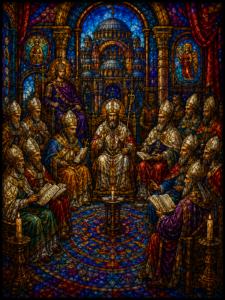
The Byzantine councils continued these struggles. The Second Council of Constantinople in 553 tried to heal divisions after Chalcedon by condemning certain writings called the Three Chapters. Emperor Justinian hoped this would win back Christians who rejected Chalcedon. The plan did not work well. It created more confusion and resentment. Pope Vigilius was pressured and appeared weak. This shows how imperial interference could damage Church unity.
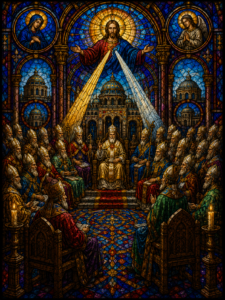
The Third Council of Constantinople in 680–681 rejected Monothelitism. This technical word means the belief that Christ had only one will. The council taught that Christ has two wills, divine and human, because he has two natures. This matters because if Christ had no real human will, then he would not be fully human. The council continued the logic of Chalcedon.
The Second Council of Nicea in 787 dealt with icons. Icons are holy images of Christ, Mary, and the saints. Some Christians rejected icons because they feared idolatry, meaning worshiping a created thing instead of God. Nicea II defended icons by distinguishing between veneration and adoration. Veneration means honor or reverence. Adoration means worship, which belongs only to God. In simple terms, Christians could honor an icon because it points beyond itself to Christ or the saint represented. They were not worshiping wood, paint, or stone.
Nicea II was also unusual because it was called by Empress Irene. This reminds the reader again that early councils were closely connected to imperial power. Emperors and empresses were not background figures. They shaped Church decisions.
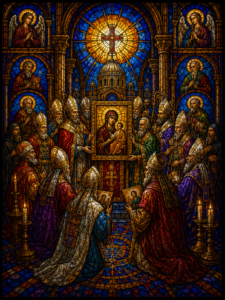
The Fourth Council of Constantinople in 869–870 dealt with Photius, patriarch of Constantinople. This council shows the growing divide between Rome and Constantinople. Catholics recognize it as ecumenical, but Orthodox Christians generally do not. That matters because “ecumenical” is not just a neutral historical label. Different Christian traditions do not accept the exact same list of councils.
After the early and Byzantine councils, Kelly moves to the medieval Western councils. These councils were more papal and more Latin. They focused less on the Trinity and Christology and more on Church discipline, reform, papal elections, crusades, and conflicts with kings and emperors.
Kelly is honest about the weakness of the medieval papacy. The tenth century was one of the lowest points in papal history. Some popes were controlled by noble families. Some were morally corrupt. This is important because it explains why reform became necessary. The papacy did not become powerful because every pope was holy. It became powerful through a long struggle for independence, reform, and authority.
The First Lateran Council in 1123 dealt with the Investiture Controversy. Investiture means the appointment of bishops and the giving of symbols of office. Kings and emperors had often treated bishops like political officials. The Church wanted to free itself from that control. Lateran I supported reforms that protected Church authority from secular interference.
he Second Lateran Council in 1139 was called by Pope Innocent II after a serious papal schism, meaning a split where two men claimed to be pope. Innocent wanted to erase the authority of his rival, Anacletus II, so the council declared Anacletus’s acts and appointments invalid. This was harsh, but it made Innocent’s legitimacy clear. The council met only three times, ended quickly, and also pushed reform by extending clerical celibacy to subdeacons and deacons, not only priests. In simple terms, Lateran II was about restoring papal unity, rejecting an antipope’s authority, and strengthening Church discipline.
The Third Lateran Council in 1179 changed papal elections by requiring a two-thirds majority of cardinals. This rule was meant to prevent rival popes. It shaped papal elections for centuries. The word conclave later came from Latin words meaning “with a key,” because cardinals were locked in until they elected a pope. This shows how practical rules developed because the Church had suffered from disputed elections.
The Fourth Lateran Council in 1215 was one of the most important medieval councils. It was called by Pope Innocent III, one of the most powerful popes in history. Lateran IV affected ordinary Catholic life. It required Catholics to confess their sins at least once a year and receive the Eucharist at Easter. Eucharist means the sacrament of Christ’s body and blood. Confession means admitting sins to a priest and receiving absolution.
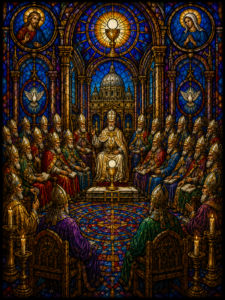
Lateran IV also used the word transubstantiation. This means the Catholic belief that the bread and wine become the body and blood of Christ, even though their appearance remains bread and wine. Like homoousios, this was a technical word used to protect a central belief. The Church used philosophical language to explain sacramental faith.
The medieval councils also dealt with relics. Relics are physical remains or objects connected to saints. Kelly notes that the problem was not only superstition but also greed. People sometimes had to pay to see or touch relics. This shows that councils often dealt with very practical abuses inside religious life.
The Council of Vienne in 1311–1312 was strongly influenced by politics, especially pressure from the French king. It is remembered partly for the suppression of the Knights Templar. Kelly treats this episode as morally troubling. Again, the book shows that councils could be affected by fear, pressure, and royal power.
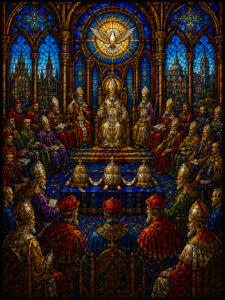
The Council of Constance in 1414–1418 dealt with the Great Western Schism, when multiple men claimed to be pope. This was one of the most embarrassing crises in Catholic history. Constance ended the schism and elected Martin V. But it also raised the issue of conciliarism. Conciliarism means the theory that a general council can have authority over the pope, especially during a crisis. This idea made sense when no one could agree who the real pope was. But later it became a challenge to Catholic teaching on papal primacy.
Constance also condemned and executed Jan Hus, a reformer from Bohemia. Hus became a martyr and national hero for many Czechs. His death helped inspire the Hussite movement and later reform efforts. This is another example of a council solving one crisis while creating or deepening another.
The Council of Florence tried to reunite Eastern and Western Christians. Agreements were signed, but they did not last. Many Eastern Christians rejected the union after their leaders returned home. Kelly’s lesson is clear: unity cannot be created only by official signatures. It must be accepted by the wider Church.
The Fifth Lateran Council, held from 1512 to 1517, had a chance to reform the Church before the Protestant Reformation. It failed to do enough. Soon after it ended, Martin Luther challenged the Church. This is one of the book’s sharpest lessons: weak reform does not prevent crisis. It often allows the crisis to become worse.
Luther argued that humans could not justify themselves before God. Justification means being made right with God. Luther emphasized faith and grace. He also argued for Scripture alone, known as sola scriptura, meaning the Bible alone should be the final authority for doctrine. This challenged the Catholic view that revelation is found in Scripture and tradition, interpreted by the Church.
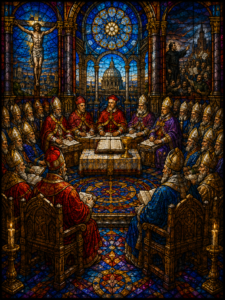
The Council of Trent was the Catholic response to Protestantism. It met in three main periods between 1545 and 1563. Trent clarified Catholic teaching and reformed Church life. It defended the Catholic canon of Scripture, including books Protestants rejected. It taught that revelation comes through Scripture and tradition. It explained original sin, justification, sacraments, confession, marriage, images, saints, relics, and indulgences.
One key teaching at Trent was that God begins the process of salvation, but humans can cooperate with grace. This is central to Catholic teaching. Catholics rejected the idea that people save themselves. But they also rejected the idea that humans have no real role. Salvation begins with God’s grace, but the person can respond.
Trent also defended the sacraments. One important phrase is ex opere operato. This means the sacraments work through the sacramental action itself, because Christ acts through them, not because the priest is personally holy. In simple terms, a sinful but lawfully ordained priest can still validly baptize, celebrate Mass, and hear confession. This protected ordinary believers from wondering whether their sacraments depended on the private holiness of the priest.
Trent defined confession as auricular, complete, and secret. Auricular means spoken privately to the priest. Complete means serious sins should be confessed. Secret means the priest cannot reveal what is confessed. Trent also strengthened priestly education. A proper system for educating priests did not exist until the sixteenth century. Trent helped create seminaries, which became schools for training priests. This was one of its most important reforms.
Trent also addressed marriage. It affirmed marriage as a sacrament and required proper witnesses and documentation. This helped prevent secret or disputed marriages. Trent also called for reform in the use of indulgences, which are remissions of temporal punishment for sin. Abuse of indulgences had helped trigger the Reformation. Trent did not accept Luther’s theology, but it recognized that reform was needed.
After Trent, more than three centuries passed before the next ecumenical council. Vatican I opened in 1869. Kelly places it in the context of the Enlightenment, the French Revolution, nationalism, liberalism, democracy, science, and the collapse of the Papal States. The Church was now facing modern ideas that challenged traditional authority.
Pope Pius IX saw many modern ideas as threats. He opposed freedom of conscience, freedom of religion, freedom of the press, civil marriage, separation of Church and state, and democracy in general. This shows how defensive the nineteenth-century papacy had become. Many Catholics wanted a strong pope to stand against modern errors.
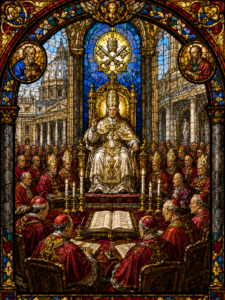
Vatican I is best known for defining papal infallibility. This is often misunderstood. It does not mean the pope is always right. It does not mean the pope cannot sin. It means that under specific conditions, when the pope speaks ex cathedra, meaning officially from his teaching office, on faith or morals for the whole Church, he is protected from error. Vatican I strengthened papal authority at the same time the pope was losing political territory.
This created an irony. The loss of the Papal States did not destroy the papacy. It gave the papacy a new kind of life. Without ruling central Italy, the pope became less like a political prince and more like a global spiritual leader.
Vatican I was interrupted by war and did not finish all its work. Because of this, its legacy was unbalanced. It said much about the pope but less about bishops and the wider Church. Vatican II would later address that imbalance.
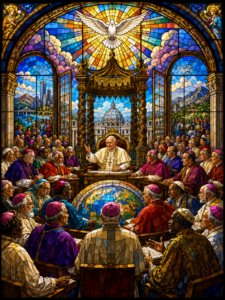
Vatican II, held from 1962 to 1965, was the most recent ecumenical council. It was called by Pope John XXIII. Unlike many earlier councils, Vatican II was not mainly called to condemn a heresy. It was pastoral, meaning focused on spiritual guidance, renewal, and the life of ordinary believers. It issued no anathemas, meaning no formal condemnations or curses. This gave Vatican II a very different tone from earlier councils.
John XXIII wanted the Church to read the signs of the times. This means the Church should pay attention to the modern world, not only condemn it. He also said that the substance of ancient doctrine is one thing, and the way of presenting it is another. This is the heart of Vatican II. The Church did not claim to abandon its faith. It tried to present the same faith in a way modern people could understand.
The most visible change from Vatican II was liturgical reform. Liturgy means the public worship of the Church, especially the Mass. The council allowed greater use of the vernacular, meaning the language spoken by ordinary people. Before Vatican II, the Roman rite used Latin. Many bishops asked why people should be expected to participate in a Mass they could not understand. Vatican II did not say Latin was evil. It recognized that Latin was the language of the Roman rite, not the language of the universal Church.
Vatican II also emphasized Scripture more strongly. The council taught that the magisterium is not above the word of God but serves it. This is important. Church authority does not stand over Scripture as if it owns it. The teaching office must listen to and serve God’s word. Vatican II also called Scripture the “soul” of theology, meaning theology should be deeply rooted in the Bible.
Another major theme was the Church as the People of God. This means the Church is not only the pope, bishops, priests, and religious orders. It includes all baptized believers. Vatican II still respected hierarchy, but it rejected the idea that laypeople exist only to obey silently. Laity means ordinary Catholics who are not ordained clergy. Vatican II presented laypeople as active participants in the Church’s mission.
Vatican II also emphasized bishops. Episcopal consecration means the sacramental ordination of a bishop. The episcopal college means the body of bishops together. Vatican II taught that bishops, in union with the pope, share responsibility for the universal Church. This balanced Vatican I’s strong focus on papal authority.
The council also changed Catholic attitudes toward other Christians. Older Catholic language often called Protestants heretics and Orthodox Christians schismatics. Vatican II used more respectful language, speaking of separated brethren. This supported ecumenism, which means the effort toward Christian unity. Vatican II taught that many elements of sanctification and truth exist outside the visible structure of the Catholic Church. Sanctification means being made holy. In simple terms, the council recognized real grace and truth in other Christian communities.
Vatican II also changed Catholic relations with non-Christian religions. The document Nostra Aetate encouraged dialogue and collaboration with followers of other religions. This was especially important for Catholic-Jewish relations. Older Christian language about Jews had often been hostile. Vatican II moved the Church toward respect, repentance, and dialogue.
The council also changed how the Church spoke about marriage. Older explanations often focused on children, sexual desire, and mutual help. Vatican II emphasized the holiness of marriage and mutual love. It described children as the fruit of love, not simply the only purpose of marriage. This mattered for couples who could not have children, because it affirmed that their marriages were not incomplete.
Kelly does not present Vatican II as a simple happy ending. After the council, debates continued. Some Catholics believed the council went too far. Others believed it did not go far enough. One major controversy was contraception. A papal commission mostly favored changing the teaching, but Pope Paul VI kept the ban. Many Catholics then asked why the Church spoke about the People of God but did not seem to listen to them. This shows one of the tensions after Vatican II: the Church used more participatory language, but authority remained centralized.
Overall, Kelly’s book shows that ecumenical councils were moments when the Church had to face its biggest questions. The first councils clarified the Trinity and the person of Christ. The Byzantine councils dealt with Christ’s will, icons, and East-West tensions. The medieval councils dealt with papal authority, Church discipline, crusades, reform, and political conflict. Trent responded to Protestantism and reshaped Catholic life. Vatican I strengthened the papacy. Vatican II renewed the Church’s tone, liturgy, relationship with Scripture, view of laypeople, relationship with other Christians, and engagement with the modern world.
The strongest lesson of the book is that Church history is both spiritual and human. Councils produced major teachings, but they were also shaped by politics, fear, ambition, violence, reform, and compromise. Kelly does not present a perfect Church moving smoothly through history. He presents a Church struggling through real problems.
In simple terms, The Ecumenical Councils of the Catholic Church is the story of how the Catholic Church dealt with crisis. Sometimes it responded wisely. Sometimes it acted too slowly. Sometimes councils healed division. Sometimes they created new wounds. But together, the councils shaped Catholic belief, worship, authority, reform, and identity.
The final message is that councils are not signs that the Church had no problems. They are proof that the Church had problems serious enough to require action. Councils forced the Church to define what it believed, correct what was broken, and respond to the world around it.