
By Simon Yammine
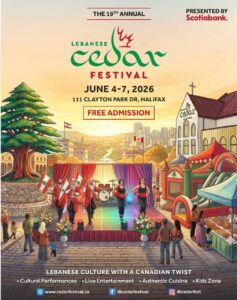
Held from June 4 to June 7, 2026, at Our Lady of Lebanon Parish, the 19th annual Lebanese Cedar Festival welcomed more than 15,000 guests over four days, making this year’s edition the biggest turnout in the festival’s history.
But the real story was not only the number.
It was the way people came. They came early, they came often, and they came back. In past years, the first and last days of the festival were often quieter, with the strongest crowds gathering around the middle of the weekend. This year felt different from the beginning. Thursday was already alive. Friday gave the festival its official voice. Saturday carried the celebration to its peak. Sunday, even as the weekend came to a close, still felt like a community that was not ready to leave.
For Halifax, the Cedar Festival was four days of music, dance, food, faith, children’s activities, entertainment, and family fun. For the Lebanese community, it was a homecoming. For newcomers, it was a warm and natural place to meet people. For Canadians discovering Lebanese culture, it was an open invitation to taste, listen, watch, and belong.
The Cedar Festival has always been more than a summer event. It is one of the places where Lebanon becomes visible in Nova Scotia, not as a distant country or a headline from abroad, but as a living culture carried by families, volunteers, parishioners, entrepreneurs, sponsors, and friends.
It takes a village to build a festival.
In 2026, that village showed Halifax what it could do.
Thursday, June 4: The Festival Opens Strong
Thursday began at 4 pm, when the festival officially opened. Opening day can sometimes feel like a soft launch before the crowds build later in the weekend. But this year, the energy was immediate. Volunteers settled into their stations, guests arrived after work, families came early, and the grounds quickly became active. That strong Thursday showed that people wanted the full weekend: the opening night, the first music, the first conversations, and the first sense that the community had come alive again.
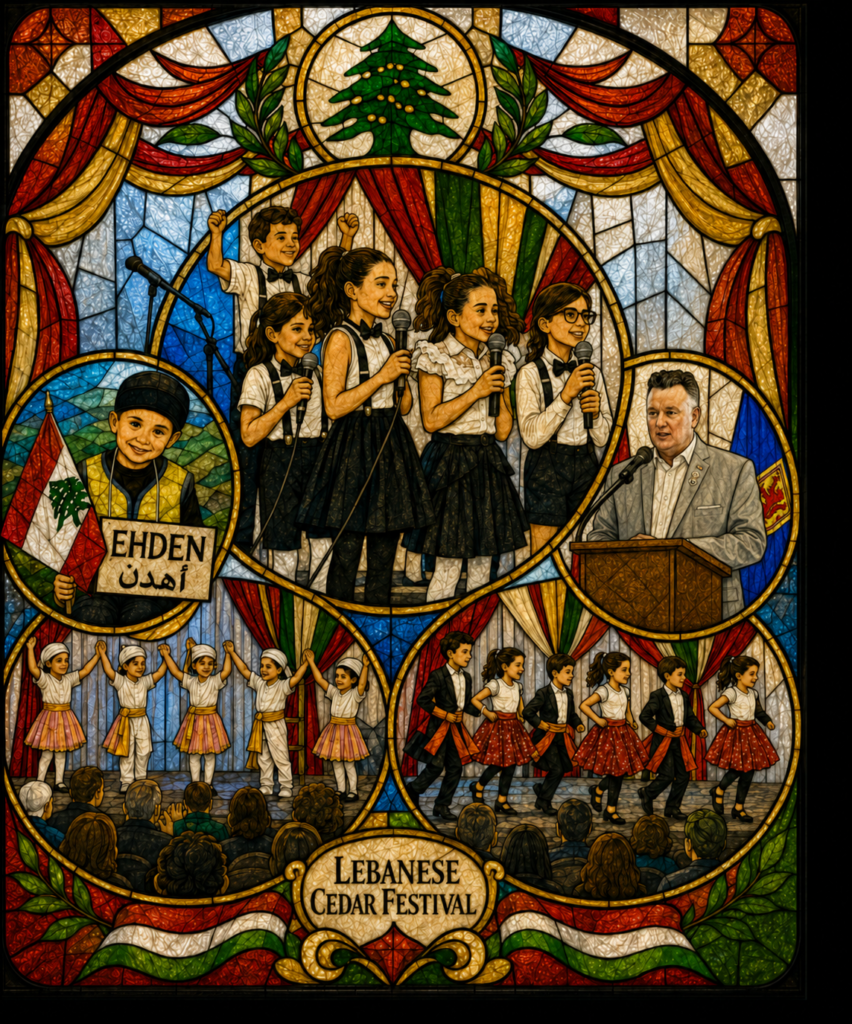
At 5 pm, the CLS Lebanese Heritage School Performance took place on the main stage. A meaningful part of the festival because it shows heritage being learned, rehearsed, and proudly presented by children growing up in Canada.
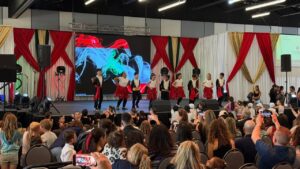
From 6 pm to 7:30 pm, the Dabke Showcase brought the first major cultural surge of the weekend. The line, rhythm, repeated steps, energy of the dancers, and response of the crowd gave the evening its unmistakable Lebanese heartbeat. Dabke is more than entertainment. It is one of the clearest expressions of Lebanese communal life.
From 7 pm to 9 pm, the evening shifted into DJ Playlist and Festival Vibes at Beirut Café. Beirut Café became one of the weekend’s gathering points, a place where music and conversation carried the evening.
Friday, June 5: Opening Ceremony and a Message Beyond the News
Friday opened at 11:30 am, moving the festival to full gear.
From 4 pm to 9 pm, the Kids Zone opened. It quickly became one of the festival’s key family features.
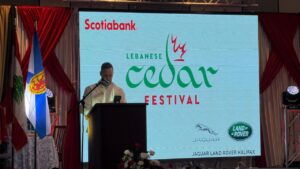
The most symbolic moment of Friday came from 7 pm to 8 pm, with the official opening ceremonies on the main stage. Led by Mario Laba and Christina Hanna, the ceremony gave the festival a formal voice and carried a theme that reached beyond the parish grounds: Lebanon is more than what people hear in the news.
That message mattered. Lebanon knows cannot be reduced to its difficulties. Lebanon is also poetry, music, mountain villages, sea, churches, mosques, food, language, hospitality, humour, family, and resilience.
That spirit was beautifully expressed when Youssef Faddoul and his granddaughter Ella narrated an adapted version of Khalil Gibran’s famous reflection, “You Have Your Lebanon and I Have Mine.” A symbol of what the festival tries to do every year: carry heritage forward without leaving the next generation behind.
The opening ceremony also included performances by Elsy and young dancer Lena Guzman, adding music, grace, and movement to an evening already rich with meaning.
This year’s opening also carried diplomatic and civic importance. The festival welcomed His Excellency Bachir Tawk, Ambassador of Lebanon to Canada, who visited Nova Scotia for the first time since assuming his position in November. His presence connected Halifax’s Lebanese community to Ottawa, Lebanon, and Lebanese communities across Canada.
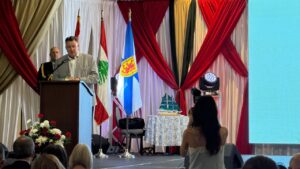
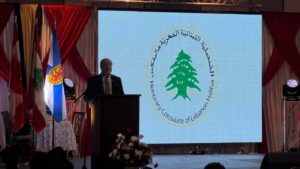
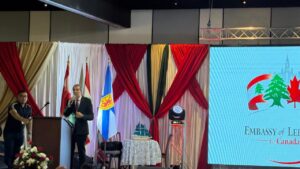
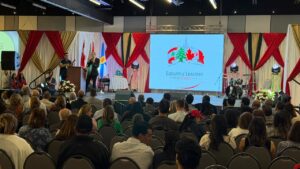
The festival also welcomed His Honour the Honourable Mike Savage, Lieutenant Governor of Nova Scotia and a long-time friend of the community and the festival; the Honourable Lena Metlege Diab, Member of Parliament for Halifax West and Minister of Immigration, Refugees and Citizenship; and Wadih Fares, Honorary Consul of Lebanon in Halifax.
In his remarks, Mike Savage brought his usual warmth and humour, joking again that he was the first Irish-Lebanese mayor of Halifax and expressing regret that circumstances had forced him to cancel a planned visit to Lebanon.
From 8 pm to 11 pm, Friday moved into entertainment with the One Man Show by Cesar El-Moujabber at Beirut Café. After the formality of the opening ceremony, the performance brought music, laughter, and late-evening energy.
Saturday, June 6: The Festival at Full Strength
Saturday was the festival at full strength.
At 11 am, the festival opened into what became the strongest day of the weekend. Every area played its role. The food stations were busy. The stage was active. Beirut Café had its vibes. The Kids Zone was running. The church welcomed visitors.
From 11 am to 6 pm, the Kids Zone continued, giving Saturday its family-friendly foundation. At noon, Beirut Café began the afternoon with Spinning Beats with DJ Khalil, creating a relaxed social atmosphere around food, conversation, and music.
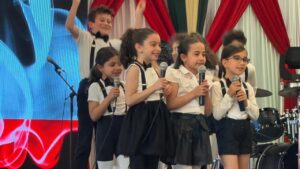
From 12 pm to 12:45 pm, the CLS Lebanese Heritage School Performance returned to the main stage. Once again, children and youth became the carriers of culture.
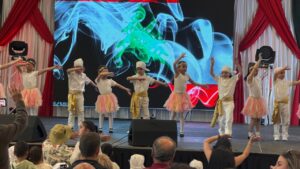
From 12:45 pm to 1:45 pm, the Dabke Showcase brought the main stage into one of its strongest cultural moments of the day. Over the weekend, more than 20 dance groups and 200 dancers performed, and their Dabke consistently drew some of the largest crowds. The steps are familiar to Lebanese families and immediately exciting to visitors discovering the tradition for the first time.
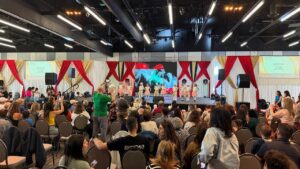
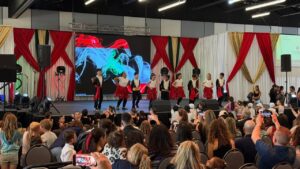
From 2 pm to 4 pm, the festival offered Church Tours at Our Lady of Lebanon Parish, giving guests a chance to move beyond food and entertainment and understand the spiritual home behind the festival. At the same time, Party Marty Live at Beirut Café brought afternoon entertainment, showing the strength of Saturday’s programming. Guests could choose between music, food, church tours, children’s activities, cultural performances, and social gathering.
From 2 pm to 3:30 pm, Cedar Fest’s Got Talent gave the community a stage for creativity with its winner Calvin Baini.
From 4 pm to 5:30 pm, Dabke with the Stars, Day 1 became one of the festival’s major entertainment highlights. The event featured Joseph Faddoul and Samantha Ghosn, Kayla Perkins and Mario Fleihan, and Julie Arab and Rayan Hobeika. It gave Dabke a playful, competitive, and community-based twist. People were not only watching dancers. They were cheering for familiar faces and community members brave enough to step onto the stage.
Another Dabke Showcase followed from 5:30 pm to 6:30 pm, bringing the evening back to traditional group performance. From 5 pm to 9 pm, Musikart Entertainment carried the evening atmosphere at Beirut Café with spinning beats.
From 8 pm to midnight, the Chady Nadef Live Party on the main stage brought Saturday to its late-night peak. It gave the festival a Lebanese night out within the broader family festival.
Sunday, June 7: The Last Day and the Long Goodbye
Sunday began at 10 am with Mass in the sanctuary, giving the final day a reflective opening after three busy days. The Mass was attended by the Honourable Lena Metlege Diab, Ambassador Bachir Tawk and Honorary Consul Wadih Fares. It also marked the 65th anniversary of service of Albert Thomas Maroun, adding a moment of recognition and gratitude to the final day.
The gathering itself was remarkable: parishioners, their Member of Parliament and federal minister, the Ambassador of their home country, and long-time community leaders all sharing the same space in prayer and celebration.
As part of the visit, Cedar Whispers presented the Ambassador with a rare 1862 map of Lebanon, a gesture that connected memory, homeland, and diaspora in a simple but meaningful way.
At 11 am, the festival opened for the final time in 2026.
The Kids Zone continued from 11 am to 5 pm, keeping Sunday family-friendly. From 1 pm to 2 pm, the Dabke Showcase brought the main stage back to one of the festival’s core traditions. Even on the final day, people gathered to watch, clap, record videos, cheer, and feel the rhythm one more time.
Peter Filman Live at Beirut Café gave the afternoon a musical atmosphere from 1 pm to 3 pm. His performance helped keep the café area active and gave guests a setting for final meals and conversations.
From 2 pm to 2:45 pm, the CLS Lebanese Heritage School Performance gave the younger generation one final moment on the main stage.
From 3 pm to 4 pm, the Dabke with the Stars Finale brought the competition to its conclusion, with Joseph Faddoul and Samantha Ghosn named winners.
The final Dabke Showcase followed from 4 pm to 5 pm, the 50/50 draw took place at 5:30 pm.
The Food: A Festival by Plate
No Cedar Festival story can be told without food.
This year, the food stations carried the kind of demand that comes when a community knows what it loves and visitors quickly discover why. Among the many menu items, chicken shawarma stood out as the crowd favourite.
But the menu was much more than shawarma. The festival offered a broad taste of Lebanese specialties, including shawarma plates, kafta, mixed shawarma plates, shawarma poutine, falafel, saj manakish with cheese or zaatar, fatayer, garlic dip, hummus, tabbouli, baklava, knafeh, namoura, petit four, and osmalieh. Each item carried a different kind of memory. Saj and manakish, in particular, connected people to village mornings, bakeries, and dough transformed by zaatar, cheese, and heat.
Food is often the easiest doorway into a culture. Before someone understands the language, history, music, or dance, they can understand hospitality through a plate. At the Cedar Festival, food did exactly that.
The Volunteers Behind the Record
If the public face of the festival was the crowd, the hidden engine was the volunteers.
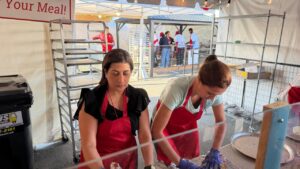
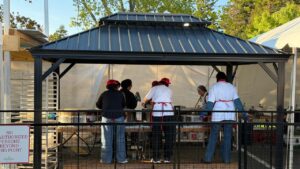
More than 400 volunteers helped make the weekend possible. Their work began long before the first guest arrived and continued long after the last plate was served. They prepared ingredients, erected tents, organized stations, managed lines, supported performances, handled stage needs, worked in the hall, helped with saj, assisted guests, cleaned tables, moved supplies, solved problems, and carried the festival through moments of pressure.
This was not casual volunteering. It was devotion.
James Ramia, Co-chair of the Festival, was seen everywhere: helping with food, managing lines, appearing on stage, and moving between the public and behind-the-scenes parts of the operation. His presence reflected the nature of the festival itself. Leadership was practical, visible, and hands-on.
Others carried the same spirit. Mounir seemed to be everywhere, one of those people whose work appeared in every corner of the festival. Sayed was part of the heavy setup effort, including erecting the tents that shaped the festival grounds. In the kitchen and food operations, Head Chef Jean Gharib, Chef Youssef, and the team from Mint Catering supported one of the festival’s most demanding responsibilities: helping feed thousands of guests over four packed days.
Among the most touching signs of service was the presence of the newly arrived sisters, Lucien and Marie Ange, who seemed to be everywhere at once. New to the parish and community, they still joined fully, helping quietly wherever needed and bringing humility, warmth, and joy to the weekend.
The work stretched across every corner of the grounds. Jinan helped on stage, inside the hall, and with saj, moving between roles as needed. Many other parish council members were also present throughout the weekend, helping with food stations, organization, guest support, and the countless small tasks that kept the festival moving.
Then there were volunteers like Fadi, who left his restaurant for two days to prepare sandwiches; Jihan, who would finish her work as a manager at Cultures and continue for another five or six hours at the festival; Susan, who took leave from her bank job to help with sandwiches; Therese, who had been there from the early preparation days, weeks before the festival opened, helping prepare ingredients and then serving through four days of sandwiches; Paula and Rita managing deserts like a military dictatorship, and many others like them.
Some names will be remembered. Others may be forgotten. But every guest felt their work. A festival of this size does not run on posters and schedules alone. It runs on people willing to show up tired, stand for hours, smile through pressure, adapt when plans change, and return the next day to do it again.
Sponsors, Fundraising, and Giving Back
The scale of this year’s festival was also reflected in the support behind it. More than 100 sponsors helped make the event possible, representing a wide network of public, corporate, local, and Lebanese-Canadian support.
The official festival sponsor structure included a presenting sponsor, special acknowledgements, bar sponsor, zone sponsors, platinum sponsors, gold sponsors, bronze sponsors, and friends of the festival.
The Cedar Festival is also a major fundraiser for Our Lady of Lebanon Parish, and this year it met its fundraising goals. The festival supports the parish, but it also extends the parish’s mission outward, opening its doors to the wider city and inviting people into a culture shaped by faith, hospitality, and service.
This year, the festival board also directed its charitable initiative toward Lebanon through a partnership with L’Oeuvre d’Orient. L’Oeuvre d’Orient is an international humanitarian and charitable organization that supports communities in Lebanon through health care, social and refugee support, and cultural preservation. That choice gave the 2026 festival another layer of meaning. Even as the community celebrated in Halifax, part of its attention turned back toward Lebanon.
A Festival for Lebanese Families, Newcomers, and Canadians
One of the reasons the Cedar Festival continues to grow is that it speaks to different groups at the same time.
For Lebanese families, it is a reunion. It is where people see friends, they have not seen all winter, where children watch the dances their parents remember, where grandparents hear familiar music, and where Arabic, English, French, and laughter mix naturally.
For newcomers, the festival is also a rare and natural networking opportunity. Conversations begin while waiting for food, volunteering, watching a performance, or sharing a table with someone new.
For Canadians with no Lebanese background, the festival is an invitation. Come taste something new. Come watch Dabke. Come hear music that moves people before they understand the words. Come bring children to the activities. Come discover a culture where hospitality is not a slogan, but a habit.
More Than Four Days
By the time the festival ended on Sunday, the visible story was clear: thousands of guests, hundreds of volunteers, numerous sponsors, fundraising goals met, four days of strong crowds, loved food, large audiences, visiting dignitaries, and a parish that opened its doors to the city.
But the deeper story was quieter. It was in the hands that prepared food weeks before the first plate was served. It was in the tents raised before the crowds arrived, the stage cues, the food lines, the children’s smiles, the laughter in the wind, and the final cleanup after everyone else had gone home.
The Lebanese Cedar Festival 2026 was the biggest in 19 years, but its success was not only its size. Its success was that it still felt personal. It still felt like a community inviting Halifax to sit at its table.
And Halifax came.
#LebaneseCedarFestival #CedarFestival2026 #CedarWhispers #LebaneseInHalifax #LebaneseCanadian #HalifaxEvents #LebaneseDiaspora #OurLadyOfLebanon #LebaneseCulture #LebaneseFood #Dabke #LebaneseCommunity #CanadaLebanon #LebanonInCanada #LebaneseHeritage