



There are places where nations remember themselves.
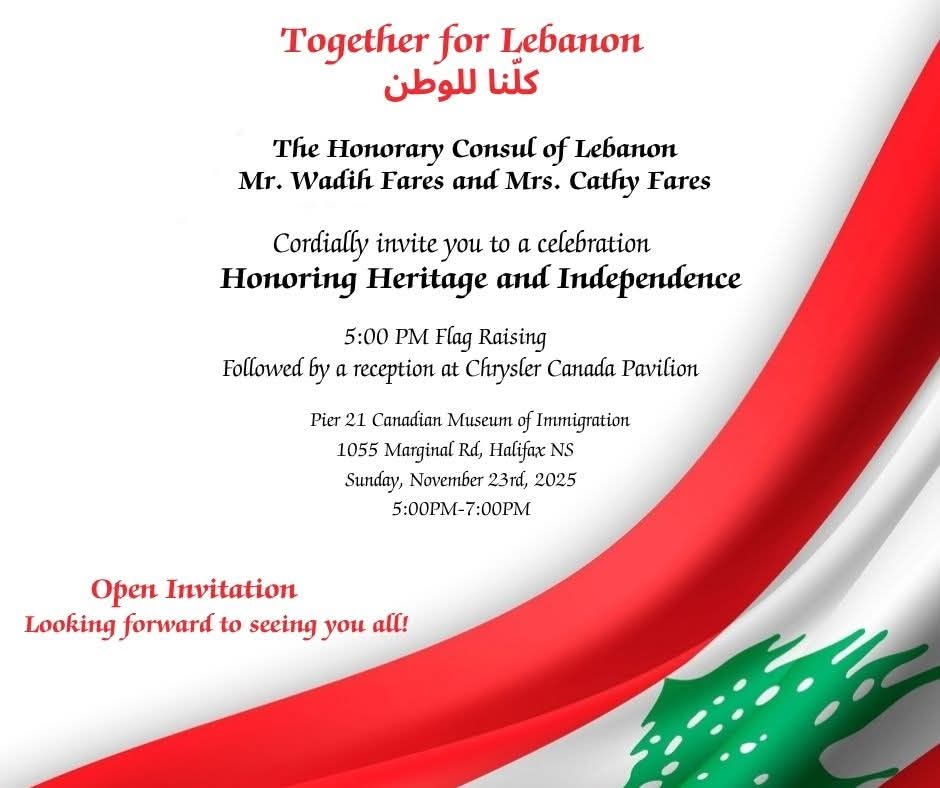
Halifax, Nova Scotia, is one such place. Where the wind carries whispers from the Atlantic, and where June’s light falls gently upon 111 Clayton Park Drive, Lebanon finds breath again and again—not in the shadow of its wounds, but in the radiance of its resilience. From June 5 to 8, 2025, the 18th Cedar Festival unfolded not merely as an event, but as a vow.
Under the aegis of Our Lady of Lebanon Church, an uprooted people bloomed once more. Halifax became a pulsing artery of a distant homeland that still bleeds, still sings, and still dances through pain. Sa’id ‘Akl’s words echoed true: “Out of the small country, we roam the globe—yet we craft a Lebanon wherever we will. ومن الموطن الصغير نرود الأرض نذري في كل شطً قرانا
“نتحدى الدنيا شعوبا ً وأمصارا ً ونبني – أنى نشأ – لبنانا

In the church courtyard, shawarma sizzled, and laughter rippled like warm air. The gracious voice of Fairouz rode the breeze, and beneath the thudding of young feet, the dabke shook the earth. Children—many knowing Lebanon only through the stories carved into their parents’ hearts—moved in rhythm with memories. Here, nostalgia is not mere yearning; it is a compass. It points home.

Throughout the festival, Lebanon was not carved in stone, but in memory. Videos flickered on screen, and the crowd fell into reverent silence. The valley of Quannoubine unfolded—proud and unyielding. Villages clung to cliffs like whispered prayers. The Mediterranean shimmered, kissing the ruins of long-fallen empires. And voices rose—not in sorrow, but in recognition.
Just as the ancient cedars bear their scars through every season yet grow stronger still, so too does the soul of the Lebanese diaspora endure and flourish. The Maronite Church continues to embody the spirit of Lebanon—its vestments embroidered with immortal cedar, its litanies echoing in the ancient Syriac tongue, the very language that once cradled the words of Christ. It is this same Church whose erudites, melfone, preserved the Arabic language when Ottoman tyranny sought to erase it, imposing Turkification on all aspect of life in the late 1800s.
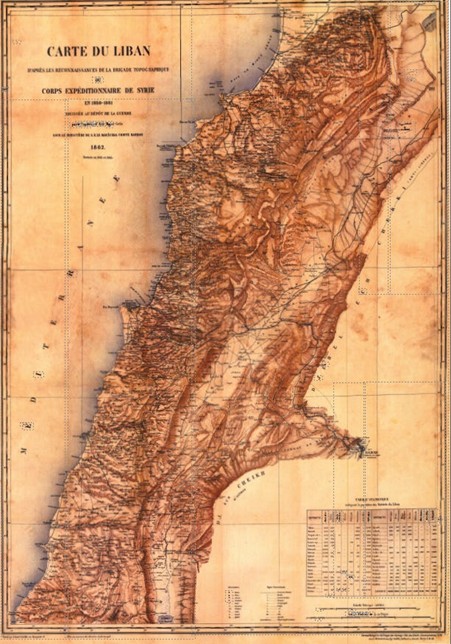
It is a poetic coincidence that its late patriarch, Elias Peter Hoayek—the very man who carved modern Lebanon’s borders with wisdom and resolve—is now, according to recent Vatican news, moving toward beatification. The dignitary who pressed Lebanon’s case at the Versailles Peace Conference, not for a homeland carved out of fear, but for one etched with dignity—dignity that this Church still represents.
Lebanon was here. Lebanese came—each and every league of its vibrant mosaic—not in contradiction, but in harmony. On a Maronite stage, it was an Orthodox dance troupe from St. Anthony’s that spun and stomped, their steps echoing the pride of ancient mountains. In the same courtyard, Muslims, enjoying eastern delicacies, marked Eid al-Adha with joy and warmth. No one asked whose rite they followed. The dabke spoke for them all: They danced for Lebanon. For every one of us. Someday maybe Sufi Qadiriyya mystics may join that circle—not as a clash of creeds, but as a continuation of something sacred. In Lebanon, the sacred is layered. In Halifax, it is shared. Where others saw diversity as a curse, we build it as a cathedral.
This is who we are. A culture that built ships before the world could name the ocean. A people who crossed seas and planted cities. Our Phoenician ancestors may have even reached America before Columbus, their alphabet etched into Paraíba stone in Brazil. Some scholars recently suggested, in a NIH article by Dr. Pierre Zalloua et al., that Phoenician expansion was less a conquest than a “franchise”—sharing language, customs, gods.
That spirit lives on today: in newcomers, in first, second, third Lebanese generations, in immigrants from every background. Most movingly, in Canadians who see Lebanese culture not as foreign, but as a bridge.
In Halifax, this bridge stands tall. Nova Scotia lieutenant governor, proud to be the first Irish Lebanese, once said that every structure that inches skyward in this city bears the mark of Lebanese hands—a nod to pioneering Lebanese developers. The mayor, joyfully, echoed the sentiment in the 16th Cedar and Maple Gala, calling himself the first Lebanese Scottish. The diaspora did not merely survive. It built futures and it is now returning Halifax—a city that its harbor once rivalled New York’s in the 19th century and, like Beirut, suffered one of history’s largest non-nuclear blasts—back to its former glory.
Still, joy carries its ghosts. One video remembered the Lebanese passengers on the Titanic—dancing dabke as the sea swallowed the stars. “‘al hiyya, l’hiyya, l’hiyya, the rope loosened, straighten it up على الهيه الهيه، العصبة انحلّت، شديها”—the chant lingered in their ears. The rope may have loosened. But still, they danced. And today, so does the Lebanese community, through every hardship.
Some may question the myth of the phoenix. But then they turn on the news: cedar-emblazoned aircrafts flying Lebanese from diaspora to Beirut airport—even as bombs fall over the southern part of the capital. Even as grief sits beside us, we whisper: “نم قرير العين يا وطني” —Rest well, dear nation. Your children are watching. Your children are rebuilding.
The 18th Cedar Festival may have ended. But it did not truly conclude. Because a people who can dance in exile, pray in Syriac, speak Arabic and French at the same time, argue politics in cafés, debate philosophy in kitchens, rise from rubble and still host weddings—such a people will not vanish. We are the children of mountains and salt, of saints and rebels, of spirit and sweat.
In Halifax, Lebanon was not remembered. It was reborn. And in every dabke step, every burst of the mizmar, every shawarma wrapped, we carved this truth into the Atlantic air: Lebanon lives. Not on a map—but in us. And we will carry it—always.
The poet Kozhaya Sassine once evoked this haunting image, of parents sheltering their children within murex shells—those ancient vessels of Phoenician dye—so their pure souls might remain untouched by a world unworthy of their light. One day, a fisherman diving for “purpura” may hear their voices echoing from the deep—and set them free to build a new dwelling.
And seeing that harmony—feeling the radiance of the community—we know this:
Lebanon will endure. Not only in its mountains, But in every exile who proudly speaks its name. The phoenix does not die. It rises from its ashes—through us.
“Our swords may break.
We may rest on our shields.
Never in defeat,
But in earned silence.
We may be defeated,
But we will never surrender.
Though we fall,
Our cause still stands.
Lebanon will always rise
From its scattered sons and daughters.
They are the sails.
And they are the wind.”