


By Simon Yammine
Food has always been more than just something to munch on. It’s tangled up in our stories, traditions, and even our biggest fights and make-ups. Meals aren’t just fuel; they’re like cultural time capsules that capture everything from family rituals to epic societal clashes. Ludwig Feuerbach famously wrote, “Man is what he eats” (Der Mensch ist, was er isst), in The Mystery of Sacrifice. Across the globe, what we eat reflects who we are, where we come from, and sometimes the battles we’ve fought over land, resources, or ways of life.
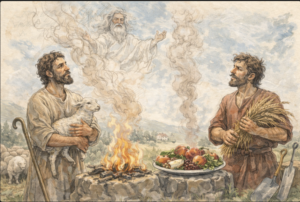
A perfect example? The biblical yarn of Cain and Abel in Genesis. At first glance, it’s a classic case of brotherly jealousy gone wrong: Cain, the hardworking farmer, brings God an offering of his crops, while Abel, the shepherd, shows up with the prime cut from his flock. God likes Abel’s gift more, Cain flips out, and boom, history’s first murder. But dig a little deeper, and it is not so simplistic. Scholars posit that this tale masks real ancient tensions in the Bronze Age Levant. Cain represents the settled farmers, glued to their fields and grains, while Abel stands for the wandering herders with their livestock. It’s Hebrew nomads versus Canaanite tillers, scrapping over scarce resources in a harsh mostly arid landscape. Those offerings? Symbols of clashing lifestyles: veggies from the earth versus herds grazing in the pastures, kicking off a cycle of division that echoes through time. That same push-pull still plays out in Middle Eastern villages today, even within tight-knit communities where herders and farmers rub shoulders but sometimes rub each other the wrong way. Stories like this show how food can bottle up deep human drama, from bitter discord to the sweet promise of coming together.
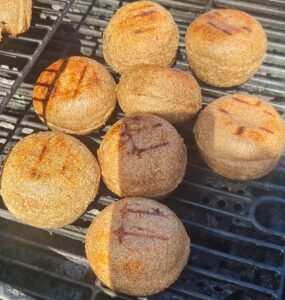
But food doesn’t always divide; sometimes it patches things up, like a culinary peace treaty. That’s the vibe in Levantine cuisine, spotlighted in the book “Making Levantine Cuisine”. In the standout chapter “When Did Kibbe Become Lebanese?” by Graham Auman Pitts and Michel Kabalan, kibbeh steals the show as a delicious emblem of reconciliation. Kibbeh is this versatile wonder: pounded bulgur wheat mixed with minced meat, shaped into balls, patties, or trays, and scarfed down raw, baked, fried, or grilled.
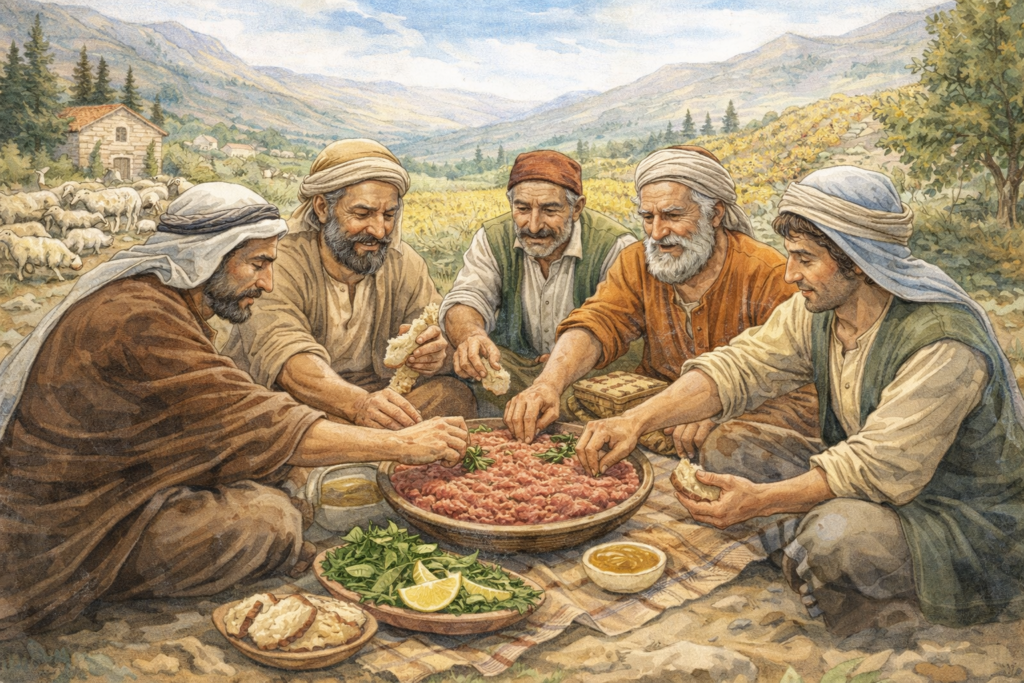
What makes kibbeh so cool? It fuses what could be rivals: bulgur from the farmers’ fields meets meat from the herders’ flocks, turning opposition into harmony you can taste. Levant’s food scene bloomed through migration and swaps, hiding rich histories under national tags. In the industrializing Levant, kibbeh went from cosy rural staple to slick urban commodity.
It’s not some hoity-toity dish. It’s everyday magic that evolved in bustling bourgeois kitchens from Ottoman times into a symbol of Lebanese pride amid all the hustle of capitalism. Its Lebanese nationalization occurred in two waves. First, the late 1800s urbanization saw rural folks hauling village recipes to Beirut, blending them into a Levantine mash-up. Then, 20th-century cookbooks clung to nostalgic rural vibes as factories and cities gobbled up old ways.
George al-Rayyis, Lebanon’s tourism minister, dropped one of the first “Lebanese” cookbooks in 1951, cementing kibbeh as national. Kibbeh includes twists like bi-l-sayniyyi or nayyi, tying them to villages famous for some unique feel: kibbeh Zghartawiyyi, Zahlawiyyi… and various shapes, from Kibbeh ‘Rass football-like to half sphere or amorphous.
Now, zoom in on the picturesque village of Ehden, tucked into northern Lebanon’s mountains, where kibbeh isn’t just a dish. It’s practically the town’s heartbeat. Ehden’s got this mythical reputation as the biblical Eden, thanks mainly to 17th-century Maronite Patriarch Estephan El Douaihy’s Latin treatise stashed in the Vatican, linking its name to Aramaic “delight.”. Here, kibbeh embodies that enduring spirit. Before Lebanon’s 1975 civil war turned everything upside down, the Ministry of Tourism threw festivals that lit up towns with culture and pride. In Ehden, crowds swarmed for dabke dances and mezze spreads where kibbeh stole the show. Raw nayyi drizzled with olive oil and mint, kibbeh ‘Rass (head-shaped patties), mamdoudeh (spread thin), or baked with crunchy pine nuts. It was all about that mountain-fresh purity. These bashes boosted Ehden’s “Eden” glow, mixing tourism with beaches and nightlife buzz. Even now, the Ehdeniyat International Festival keeps the flame alive, with kibbeh stunts like that Guinness-record 233kg behemoth.
In our hometown, even sorrow has a ritual, and kibbeh is part of it. When there is mourning, they say bi tobbou el jorn. Jorn el-kibbeh, the special stone used for pounding kibbeh, is turned upside down. It is almost shameful to use it in days of grief. Sometimes, for a year, if the deceased was young or part of a vendetta. In my hometown, kibbeh is not a neutral food. It is a universal symbol of joy, gathering, and communal life.
One of the former Superior Generals of the Lebanese Maronite Order once told a story from the 1980s. It was customary then to send monks to preach in parishes during the last week of Lent. By lot, he was assigned to Zgharta–Ehden. His more experienced companions told him before he left, “You are going to a parish whose churches do not empty during Lent. During Passion Week, people almost overflow from the doors and windows.”
And that is exactly what he found. The church was full beyond measure. He discovered a parish whose men went in line with Clovis, King of the Franks. When told about the story of the crucifixion, he is said to have exclaimed,“Oh, if only I had been there with my Franks!” Faith here is not ornamental. It is intense.
But when the Abbot stepped outside after the liturgy, he was stunned. Women were walking through the market carrying large trays of kibbeh toward the traditional stone ovens, Zahkia being the oldest and most famous one. He thought to himself: meat? On Good Friday?
Only later did he learn the truth. It was kibbeh hommos, chickpea kibbeh, a meatless version shaped exactly like the original. Even kibbeh, it seems, has learned to respect the fast. Unfortunately, he had to wait years before tasting it himself. And when he finally did, it was at Saint Maroun’s Annaya, when two trays were brought to the monastery.
The Maronite twist adds some gritty depth to kibbeh nayyi’s raw appeal. Oral tales say that during Mamluk and Ottoman crackdowns, Maronites fled to Mount Lebanon’s valleys and grottos to keep their faith alive. Fire? Total giveaway. Smoke snitched to pursuers. So, they skipped flames, whipping up raw kibbeh from fresh meat pounded with bulgur for quick, silent sustenance. UNESCO-listed Qannoubine Valley’s spots, with low doors and twisty entrances to fend off cavalry, scream that survival smarts. Sure, not rock-solid history, but flavorful folklore: kibbeh nayyi flipped from cautionary grub to bold treat. Lebanese folks eat it super fresh post-slaughter, betting on trusted sources. In Ehden, a Maronite hub, this yarn hits home, linking kibbeh to a legacy of tough-it-out endurance that makes every raw bite feel like defiance.
Shifting gears from Ehden’s kibbeh vibes, let’s talk Samriyyi. The spark that kicked off a buzzing restaurant scene around Mar Sarkis Spring. As the grandmother of my wife’s mother, Samriyyi, and her husband Youssef Al-Asmar, launched Asmar restaurant back in 1932, turning it into a local legend nestled by those gushing waters under shady trees, with views that holler “Eden paradise.” She wasn’t your average cook; she was a boss demanding top-notch quality, dishing out generous heaps that left folks raving. Her kibbeh? Pure heaven, with spices that waltzed on your tongue, sourced from butchers who quaked under her stern gaze. Her legacy lives on through the women of her family. The kibbeh that the Abbot finally tasted had been prepared by none other than my mother-in-law, Claude Nehme, who is, incidentally, the granddaughter of the renowned Samriyyi. This tale weaves into Ehden’s bigger buzz: Mar Sarkis morphed into a hotspot, birthing eateries that mixed old-school traditions with tourist charm. Pre-war, crowds piled in for mezze under the cedars, Arak flowing like the spring, sparking a vibe where hospitality met hustle.
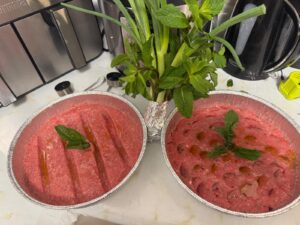
That family magic stretches 10,000km from those Lebanese hills, where my wife keeps Samriyyi’s flame burning in our Halifax kitchen. Uprooted but unbreakable, she recreates that kibbeh with fresh Halifax finds, mincing lean meat, soaking bulgur just right, folding in onions and spices with the same care her great-grandma did. It’s a ritual turning a simple meal into a bridge across oceans. Amid Canada’s snowy winters and busy modern life, this act isn’t just cooking. It’s preservation, a tasty rebellion against forgetting. One bite, and you’re back at Mar Sarkis, the spring’s babble mixing with laughter. It’s continuity in exile, transforming distance into delicious celebration, proving food’s power to root us no matter where we land.
Beyond just keeping us fed and kicking, food can pull off some real miracles like fostering reconciliation in a divided world. Hopefully, some simple dish will emerge to bring together the Janjaweed shepherds, those nomadic herders desperately seeking pastures in Sudan’s arid landscapes, with the Fur farmers, who fiercely cultivate and protect their millet fields. Their struggle mirrors the Cain and Abel conflict. In a world still simmering with these divides, food’s quiet diplomacy might just heal Sudan’s wounds, one bite at a time.
That is my stubborn belief, at least. No conflict is beyond conversation, and no conversation is impossible around a table in one of Beirut’s Zghartawi restaurants, such as Kibbet Zaman, Julia…where grievances eventually give way to kibbeh and its accessories.
