

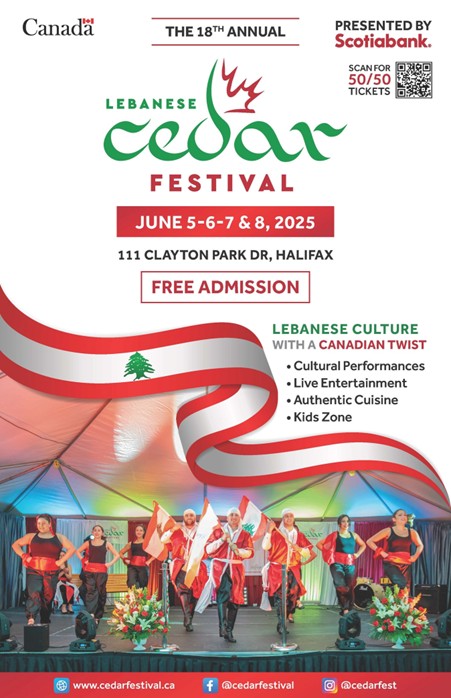

In Halifax, where the Atlantic breeze carries whispers of distant homelands, the Lebanese Cedar Festival stands as a vibrant tribute to a culture that continues to flourish far from its roots.
Held annually on the grounds of Our Lady of Lebanon Maronite Catholic Church, this four-day celebration is more than a summer event—it’s a cultural anchor. A living expression of Lebanese identity, stitched into the multicultural fabric of Nova Scotia with pride, memory, and a hint of joyful chaos.
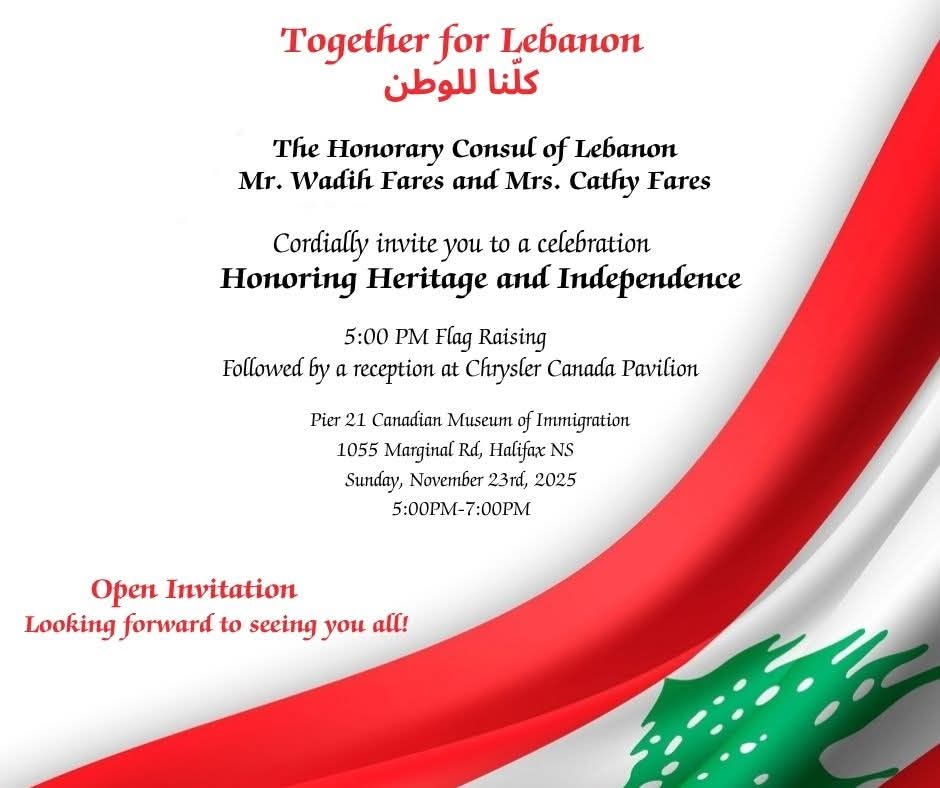
This year, the festival culminates constellation of historic moments: the unveiling of the Cedar & Maple monument at Pier 21, the consecration of Saint Antonios Antiochian Orthodox Church, the 16th Cedar & Maple Gala Dinner, and a visit from renowned Lebanese comedian Fady Raidy at Dalhousie University. Together, these events illuminate the depth and reach of Lebanese contributions to the province.
The Lebanese Cedar Festival isn’t just for those with Lebanese roots—it’s for anyone who values culture, community, and connection. Whether you’re Lebanese by blood, marriage, friendship, or curiosity, this is your open invitation to step into a celebration that’s as rich in history as it is in hospitality. Bring your family, your appetite, your dancing shoes—and find yourself welcomed by a community that turns strangers into cousins.
Roots of the Cedar: A Festival Born in Faith and Vision
The Lebanese Cedar Festival was first envisioned in November 2006 by the parish council of Our Lady of Lebanon. Their goal was clear: preserve the rich traditions of Lebanon and offer a joyful space where Lebanese Canadians could reconnect with their heritage—and proudly share it with others.
The first edition launched in 2007 and it wasn’t just a celebration—it was a public declaration that Lebanese culture would continue to thrive, no matter how far from Mount Lebanon or the Mediterranean Sea.
Today, as the festival prepares for its 18th edition in 2025, it remains one of Halifax’s most dynamic cultural experiences—drawing thousands, free and open to all. It’s where the cedar tree, Lebanon’s emblem of resilience, stands tall beside the coastal warmth of Nova Scotia.
Milestones: A Journey of Belonging
The Cedar Festival’s timeline is punctuated by moments that reflect the growth and maturity of the Lebanese community in Nova Scotia. Year after year, it has built bridges—not just between generations of Lebanese Canadians, but between communities.
Whether supporting local charities like Feed Nova Scotia, or inviting non-Lebanese Haligonians into the experience, the festival isn’t only about heritage—it’s about hospitality, solidarity, and service.
The People: Faces Behind the Festival
The festival is powered by volunteers, organizers, parishioners, and families—people who don’t just represent Lebanese culture; they embody it. From elders sharing memories of their mountain villages, to young volunteers coordinating logistics on smartphones, the event is an intergenerational feat of love, labor, and laughter.
Behind every dabke line and man’oushe stand those who spend months preparing: coordinating permits, marinating meat, rehearsing dances, and managing crowds with the calm of someone who has hosted 30 cousins in one living room.
Culture in Motion: Dance, Music, and Memory
The festival is a sensory immersion. The sound of tabla drums, Darboukka and Fairuz classics drift through the crowd, eventually overtaken by the rhythmic stomp of dabke dancers in a half-moon formation.
If you’ve never danced dabke before, don’t worry—you’ll be pulled in anyway, tripping over the steps, laughing, and suddenly realizing you’re part of something much older than the moment.
From traditional folk music to contemporary Lebanese pop, the sounds of the festival are a reminder: Lebanon is ancient, but never frozen in time. Its culture adapts, blends, and celebrates.
Depth, Humor, and Legacy
There’s a saying among Lebanese elders: “You can leave the mountain, but the mountain never leaves you.” The festival lives in that spirit. It’s where a grandmother tells her grandchild about olive groves in her hometown, and that same child, minutes later, is chasing a balloon across the church yard.
It’s a collision of memory and modernity. It’s where elders share stories of their mountain villages, while young Canadians proudly wear their heritage, dance dabke, and speak a mix of Arabic and English that carries both past and present.
And yes, there’s humor too—especially when a newcomer joins the dabke line and looks like a lost seagull trying to clap on beat. But the beauty is: no one minds. Because participation is the point.
A Living Legacy
The Lebanese Cedar Festival is not a nostalgic look backward. It is a forward-facing declaration that culture is carried—not stored. And in Halifax, that culture is alive.
Together with other Lebanese activities in Nova Scotia, the festival is part of a powerful cultural narrative: one of integration without assimilation, of memory without borders.
It is Lebanon—planted in Canadian soil, watered by memory, and growing stronger every year.