

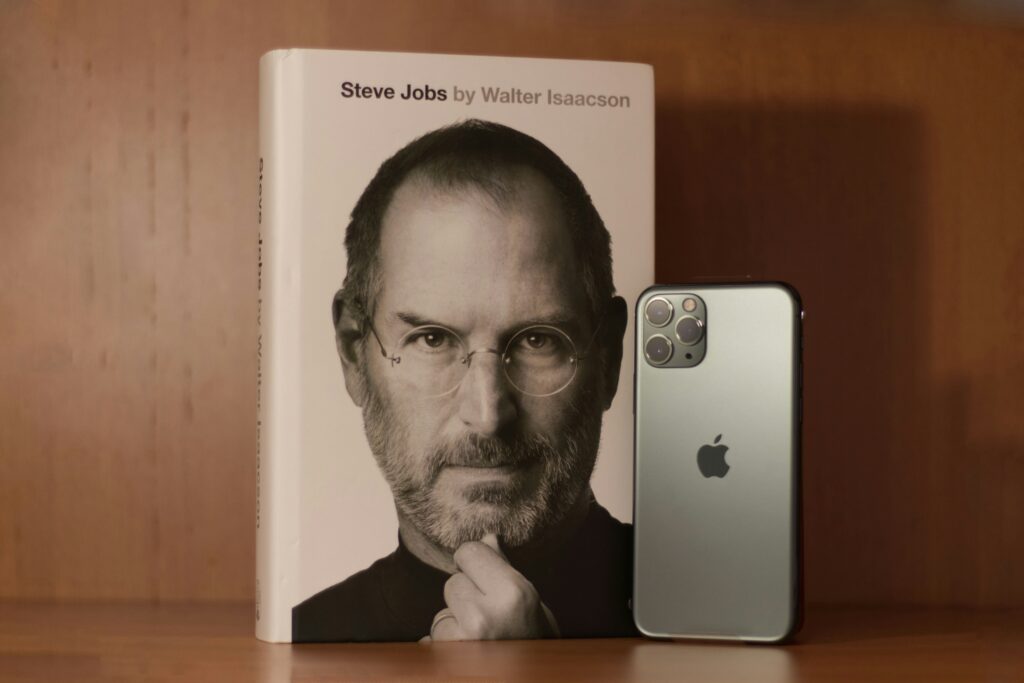


Imagine the hollow ache of waking to a world stripped of your smartphone. No sleek device buzzing with notifications, no endless scroll through social media, no GPS guiding you through traffic, or a camera capturing every moment in an instant. Daily life would grind to a halt. Business meetings would rely on landlines, maps would stay folded in glove compartments, and entertainment would shrink to bulky radios or televisions. The app economy, worth trillions, would vanish, leaving industries like ride-sharing, online shopping, instant banking, and even telemedicine in ruins. We would revert to a slower, disconnected era, where information arrives by newspaper, connections happen only face-to-face, and the world feels infinitely larger and lonelier. This is not mere inconvenience. It is a profound loss, severing the threads that bind us in our fast-paced, deeply human need to stay close, to share, to remember, and to dream together.
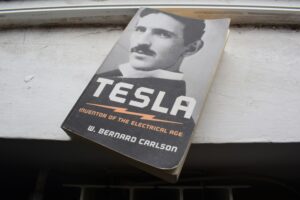
Now, extend that void to the electricity powering your home. Picture flipping a switch, and nothing happens. No lights piercing the darkness, no appliances humming to life, no vast grid delivering power across cities and continents. Factories would idle, hospitals would struggle with manual backups, and entire economies would falter without reliable energy transmission. The 20th-century industrial boom, fueled by widespread electrification, would fade away. We would rely on inefficient direct current systems, limiting power to short distances and stunting technological growth. Life would become dimmer, literally and figuratively, confined to localized energy sources like candles or generators. Nights would stretch longer, work would end with the sun, and the simple act of reading, studying, or caring for loved ones after dusk would become a luxury few could afford.
And what about portable music? Envision commutes without headphones streaming your favourite playlist, no “1,000 songs in your pocket” to soundtrack workouts, long drives, or quiet moments of reflection. Music would remain tethered to home stereos or clunky CD players, with physical albums gathering dust on shelves. The digital revolution in entertainment would stall. Streaming services would never emerge, concerts would feel less accessible without on-demand access, and the intimate connection between a song and a personal memory would weaken. Social sharing of tunes would dwindle, and the creative explosion in podcasts, audiobooks, and personalized soundscapes would never materialize. In moments of joy, grief, or solitude, we would be left without that quiet companion that so often lifts our spirits or helps us endure.

In the sun-drenched streets of Homs, Syria, a city whose clever people have long been the subject of fond jokes, much like any sharp-minded folk enduring the envy of the ordinary, a young man wandered amid ancient ruins and bustling bazars in the early 1950s. These inhabitants of Homs, with their quick wit and resilient spirit, once gifted the Roman Empire three of its greatest thinkers during the Pax Romana: Julia Domna, the influential patroness who championed philosophy and rhetoric; Cassius Longinus, the profound critic whose ethical insights and literary analyses resonated across academies; and Iamblichus, the visionary Neoplatonist who fused rational inquiry with divine mysticism. Yet, in mid-20th-century Homs, that intellectual legacy simmered under a tepid veil of constraint. Economic drudgery and stifled freedoms under perpetual dramas and coups dulled ambition’s edge. Born in 1931 as the youngest of nine in a respected family, he dreamed amid the arches, yearning for horizons beyond survival. First, Lebanon called, with Beirut’s American University offering a taste of freedom. At 18, he ventured there, earning degrees in political science and economics amid the city’s electric ideas. But unrest, protests, and instability stirred deeper longings. In the mid-1950s, he braved oceans to America, landing in New York before pursuing graduate studies at the University of Wisconsin. A romance with fellow student Joanne Schieble bore a son in 1955. His path meandered: teaching politics, then hotel management in Nevada, a life of quiet.
Across Europe a hundred years earlier, in the humble village of Smiljan in the Austrian Empire, another soul paced rural lanes in the late 19th century, his mind ablaze with visions. Born in 1856 to Serbian parents, a scholarly priest father and inventive mother, he shone early, devouring books and crafting contraptions. Ethnic strife and poverty gripped the region, crushing opportunities. He studied engineering in Graz and Prague, but disasters struck. A gambling folly erased his savings, forcing gruelling labour. At 28, he sailed to New York with pocket change.
In the verdant hills of Zahle, Lebanon, cradled by the Beqaa Valley’s olives and vines, a man from humble roots contemplated escape from Ottoman-era turmoil in the early 20th century. Whispers of America’s promise lured him. In the 1920s, he crossed seas to Toledo, Ohio, weaving into a Lebanese enclave. His U.S.-born son, a salesman like his dad, embodied that Lebanese grit, nurturing a home where Lebanese resilience met American opportunity.
These poignant sagas of dreams deferred and spirits unbroken may seem disparate, but they converge in triumph. The wanderer from Homs? Abdulfattah Jandali, biological father of Steve Jobs, whose aching genius birthed the iPhone, igniting our connected souls. The villager from Smiljan? Nikola Tesla, the tormented immigrant whose alternating current (AC) systems illuminated humanity’s path, banishing darkness with hope’s light. And the salesman from Zahle? Tony Fadell’s grandfather, whose leap enabled his father, a beacon of perseverance, to inspire the “father of the iPod,” unleashing music’s emotional floodgates worldwide. In these lives, we see migration’s raw power: hearts uprooted, yet blooming anew.
This is not new. Migration’s fire has forged civilizations. Kadmos, the Phoenician prince, followed his abducted sister Europa across seas, teaching the Greeks their alphabet and seeding myths. Elissa, known as Dido, fled tyranny in Tyre, building Carthage’s empire from exile’s ashes, her resilience echoing through history. Such journeys, born of necessity, weave the tapestry of progress.
As the great poet Emma Lazarus captured in her immortal sonnet “The New Colossus” (1883), etched forever on the Statue of Liberty:
“Give me your tired, your poor,
Your huddled masses yearning to breathe free,
The wretched refuse of your teeming shore.
Send these, the homeless, tempest-tost to me,
I lift my lamp beside the golden door!”
These words remind us of the welcoming spirit that has defined welcoming nations, echoing the timeless truth spoken by Franklin D. Roosevelt: “Remember, remember always, that all of us, and you and I especially, are descended from immigrants and revolutionists.”
Jandali’s odyssey, Tesla’s trials, and Fadell’s legacy mirror immigration’s profound gifts. For host nations, like the United States and Canada, the true melting pot amid rising chauvinism, immigrants infuse vitality. In Canada, where the people embody a spirit of inclusivity and warmth, welcoming newcomers with open arms, studies reveal immigrants spark economic growth. For instance, international students alone contributed around $37.3 billion to the economy in 2022 through spending on tuition, accommodation, and other items. Moreover, immigrants who become citizens often achieve higher earnings, better employment rates, and greater participation in the public sector compared to non-citizens. Overall, immigration supports long-term per capita GDP growth, with research emphasizing that well-managed inflows can boost average living standards while addressing labor shortages. Their diversity kindles creativity: Jobs’ iPhone mends hearts across divides, Tesla’s AC powers dreams, Fadell’s iPod harmonizes souls. Without them, societies dim, economies falter.
For migrants, it is salvation from wasted brilliance. In shadowed homelands, conflict’s grip, poverty’s chains, talents rot. Jandali’s Homs confined his intellect. Migration freed it. Tesla escaped strife’s jaws. Fadell’s kin fled instability. It offers refuge from perils.
Challenges pierce like thorns: prejudice’s sting, homesickness’s sorrow, adaptation’s quiet despair. Yet, triumph awaits: lives empowered, worlds enriched.
To new immigrants: Do not fear the unknown. You will thrive. Your descendants will soar, carrying your fire forward. Embrace the leap. Your stories will inspire generations.
To hosts: Welcome diversity with open hearts. It enriches us all, turning strangers into kin. In this shared journey, let us build bridges, not barriers.
And to Canada and its wonderful people, we offer deepest gratitude. Thank you for your warm hospitality, for opening your arms to dreamers from every corner of the earth, for the quiet strength with which you welcome and nurture, even amid mounting chauvinism elsewhere. From Nova Scotia’s shores to the vast prairies and northern lights, you show us what unity looks like when hearts remain open. You are a beacon of hope, a home for the hopeful, and for that, we are forever thankful.
What legacy will you forge? The time is now. Act with courage, for the world needs your light.