

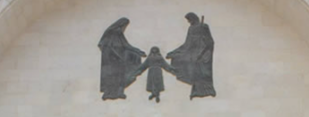


Some arrivals carry with them more than suitcases and schedules. They carry memory. History. Sacrifice. And a mission shaped long before any of us were born.
The arrival of two sisters from the Congregation of the Maronite Sisters of the Holy Family to serve alongside Father Eid at Our Lady of Lebanon Parish in Halifax is one such moment. It is not simply the welcoming of two religious women into parish life. It is the continuation of a story that began more than a century ago, during one of the darkest chapters in Lebanese history, under the guidance of a patriarch whose legacy still shapes Lebanon, the Maronite Church, and our very presence here in Canada.
Patriarch Elias Peter Hoayek: Architect of Faith, Nation, and Survival
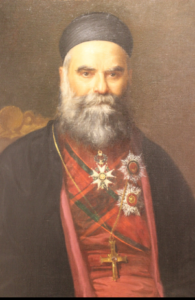
Patriarch Elias Peter Hoayek was not only a spiritual leader. He was a builder of institutions, a defender of human dignity, and a protector of a people facing extinction.
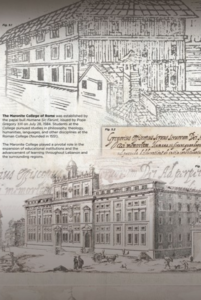
As Maronite Patriarch from 1899 to 1931, Hoayek oversaw the renewal of the Maronite Church at a global level. When the original Collegio Maronita Pontificale, founded in 1584 by Patriarch Sergius al-Rizzi in the Viccolo dei Maroniti, closed after nearly two centuries, and now the restaurant Sacro e Profano, Hoayek did not accept decline as destiny. He re-established the Maronite College in Rome, deliberately placing it in one of the most important areas of the Eternal City, ensuring the intellectual and theological formation of clergy who would serve not only Lebanon but the worldwide diaspora.
He also established Our Lady of Lebanon Church in Paris, recognizing early the need for spiritual anchors for the growing Lebanese community in France. In Jerusalem, he reinforced the Maronite presence by establishing the Wakalah Batriarkiyya, safeguarding centuries-old Christian roots in the Holy Land.
But his most defining legacy was forged during World War I.
Between 1915 and 1918, Lebanon endured one of the worst famines in modern history. Under Ottoman blockade, compounded by war and disease, an estimated one-third of the Lebanese population perished from hunger and illness. Patriarch Hoayek became known as “the Patriarch of the White Hands” because he gave everything. He emptied Church resources, sold property, mobilized monasteries, and coordinated aid to save lives, regardless of religion or affiliation.
Between 1860 and 1920, Lebanon lost roughly one-third of its people to death and another one-third to forced migration. This mass displacement is not an abstract statistic. It is one of the reasons Lebanese communities took root in places like Halifax. It is why Our Lady of Lebanon Parish exists today.
It was in this context that he founded the Congregation of the Maronite Sisters of the Holy Family in 1895.
The Maronite Sisters of the Holy Family: Service at Scale, Compassion in Action
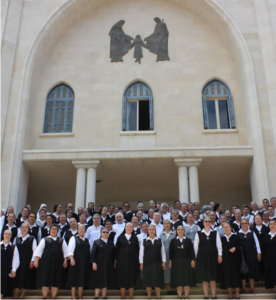
The Order was created not as a contemplative retreat, but as an active force of service. Patriarch Hoayek envisioned an order of women who would serve families, educate children, heal the wounded, and stand where the state could not.
Today, the Congregation is one of the largest and most impactful women’s religious congregations in Lebanon.
The Sisters operate:
- Dozens of schools across Lebanon, educating tens of thousands of students over generations
- Hospitals and medical centers, including the renowned Geitawi Hospital in Beirut, founded in 1927.
- Social care institutions, orphanages, homes for the elderly, and support centers for women.
Faith Under Fire: A Personal Memory of Courage
For many Lebanese families, the Maronite Sisters are not distant figures. They are part of personal history. For me, that history is deeply personal, my late aunt Rita being a member of the Order.
She was an accredited nurse, specialized in burn treatment, during the Lebanese Civil War. At a time when Beirut was divided by demarcation lines, and danger was constant, the sisters crossed those lines daily to keep hospitals the main governmental hospital in Karantina functioning.
Amid shelling, shortages, and chaos, the sisters remained. They treated burn victims, civilians, and the wounded when others could not reach them. Their presence ensured that medical care did not collapse when institutions failed.
This was the Order Patriarch Hoayek envisioned: women who would stand where fear prevailed, who would serve when retreat was easier, and who would embody faith through action.
A Blessing for Halifax Today
The arrival of two sisters in Halifax brings this legacy full circle.
They come to support Father Eid, whose pastoral mission extends far beyond liturgy into the everyday lives of families navigating faith, identity, and belonging in the diaspora. Their presence reminds us that the Church is not sustained by buildings alone, but by people who show up, day after day, with humility and devotion. They also remind us that our diaspora story did not begin with success, but with survival.
This meaningful arrival would not have been possible without the dedication and quiet efforts of the Lebanese Honorary Consulate, and in particular Aida Hachem, whose commitment to serving the Lebanese community in Halifax continues to build bridges between faith, heritage, and diaspora life.
A Welcome Rooted in Gratitude
To the two sisters joining our parish, we say: welcome. May you find in Halifax a community worthy of that legacy.
To our parish, this is a moment to reflect and to give thanks. To remember why we are here. To honour those who came before us. And to renew our commitment to faith lived through service.