



Every December, as lights glow in windows and churches fill with hymns, a familiar question quietly returns: Why do Christians celebrate Christmas on December 25th? And just as often, another follows: Why do some Christians celebrate it on different days?
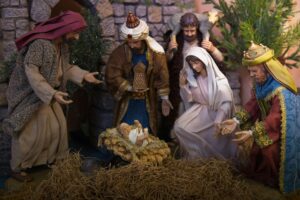
These questions are not new. They have echoed through centuries of faith, calendars, empires, and reform. Yet the answers, when approached with humility and goodwill, do not divide Christianity. Instead, they reveal something deeply human and profoundly Christian: our shared desire to mark sacred time, to remember the Incarnation, and to walk together toward the Light.
Christmas, at its heart, is not a date. It is a declaration: God entered history.
Why December 25th?
The early Christian community, living under persecution and without centralized institutions, did not initially celebrate birthdays at all. Their focus was the Resurrection.
As Christianity spread in the early centuries, believers sought to commemorate Jesus’ birth, the Nativity, though the Gospels provide no specific date. By the mid-4th century, December 25 had become the established date in the Western (Roman) Church, with the first recorded celebration in Rome occurring in 336 CE during Constantine’s reign.
Scholars propose two main explanations for this choice, often in combination rather than strict opposition.
One prominent theory points to potential overlap with Roman winter solstice celebrations. December 25 marked the traditional date of the solstice in the Julian calendar, symbolizing the “rebirth” of the sun as days began lengthening. The Roman festival of Dies Natalis Solis Invicti instituted by Emperor Aurelian in 274 CE, was observed around this time. Some historians suggest early Christians may have selected December 25 to Christianize existing cultural festivities, reinterpreting solar imagery to represent Jesus as the “Light of the World.”
A stronger scholarly consensus supports the “calculation hypothesis,” rooted in early Christian theology and chronology. Influenced by Jewish traditions that great prophets or figures completed their lives on the same calendar date they were conceived, known as “integral age”, many early Christians believed Jesus’ conception and death occurred on the same symbolically significant day.
By the 3rd century, writers such as Tertullian and Hippolytus of Rome fixed March 25, the spring equinox in the Roman calendar, as the date of the Crucifixion. Equating this with the Annunciation, Gabriel’s announcement to Mary marking conception, and adding nine months of gestation naturally yielded December 25 as the birth date. This internal Christian reasoning appears in sources as early as the 3rd century and aligns with symbolic cosmic harmony: conception at the equinox, birth at the solstice.
Both explanations can coexist. Christianity has always been skilled at transforming time itself, infusing existing rhythms of the world with deeper meaning. In celebrating Christ’s birth near the darkest days of winter, the Church proclaimed a timeless truth: light enters when darkness seems strongest.
December 25th became not a compromise, but a proclamation.
Different Dates, One Faith
Today, most Christians around the world celebrate Christmas on December 25th or January 7th. At first glance, this appears to be a disagreement. In reality, it is a difference of calendars, not belief.
Western Christian churches, including Roman Catholic and most Protestant traditions, follow the Gregorian calendar. Many Eastern Orthodox churches continue to follow the Julian calendar for liturgical purposes. The Julian calendar currently runs 13 days behind the Gregorian one, which places December 25th (Julian) on January 7th (Gregorian).
The Nativity remains the same feast. The hymns are the same. The theology is the same. Only the clock differs.
This distinction matters because it reminds us that timekeeping is a human tool, while faith points beyond time.
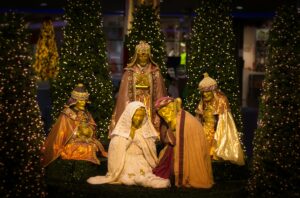
The Calendar Question and the Need for Reform
The Julian calendar, introduced by Julius Caesar in 46 BC, was remarkably accurate for its era but slightly miscalculated the solar year. That small error, just 11 minutes per year, accumulated over centuries. By the 16th century, the calendar had drifted by about ten days.
This drift affected agricultural cycles, astronomical observations, and crucially for the Church, the calculation of Easter.
In 1582, Pope Gregory XIII introduced the Gregorian calendar, correcting the accumulated error and refining leap year rules. This reform was not theological but practical. It was an attempt to realign the calendar with the sun and seasons.
Some Christian traditions adopted the change quickly. Others, especially in the East, retained the Julian calendar for liturgical continuity, not out of rejection, but out of reverence for tradition and unity within their ecclesial life.
Neither choice diminishes the faith of those who celebrate.
The Honest Mistake of Dionysius the Younger
Another layer of this discussion involves Dionysius Exiguus, also known as Dionysius the Younger, a 6th-century monk tasked with calculating the date of Christ’s birth to establish the Anno Domini (AD) system.
With the historical tools available to him, Dionysius placed the birth of Christ around what we now call the year 1 AD. Modern scholarship suggests this was likely off by a few years, possibly placing Christ’s birth between 6 and 4 BC.
This was not deception, nor theological failure. It was the best scholarship of its time.
Christian faith does not rest on perfect arithmetic. It rests on a real Incarnation, in real history, even if our calendars carry small imperfections. The Gospel is not weakened by human miscalculation; it is strengthened by humility.
What about January 6th?
The date January 6th holds a very ancient place in Christian history. In the early Church, Christ’s birth and baptism were celebrated together in a single feast known as Theophany or Epiphany, meaning “manifestation.”
To this day, the Armenian Apostolic Church preserves this early tradition, celebrating the Nativity and Theophany together on January 6th. This practice reflects one of the oldest Christian celebrations, dating back to the first centuries of the faith.
What matters most is not whether Christmas is celebrated on December 25th, January 6th or 7th, but why it is celebrated at all.
Christians across traditions proclaim the same mystery: that God took flesh, entered human history, and sanctified time itself. Whether candles are lit earlier or later, the Light they represent is the same.
In a fractured world, this shared belief is a powerful witness. It reminds us that diversity of practice does not mean division of faith. As Scripture teaches, “There is one body and one Spirit, just as you were called to one hope.”
A Season Greeting, Not a Debate
As Christmas returns each year, it invites us to step out of arguments and into wonder. It calls us to humility over precision, communion over calculation, and love over correctness.
The Child in the manger did not ask humanity to agree on a calendar before He came. He came anyway.
So, whether Christmas finds you in December 25th or in January, in a Western cathedral or an Eastern parish, with Gregorian precision or Julian continuity, the greeting remains the same:
Peace on earth. Goodwill toward all.
May this season remind us that time may differ, calendars may shift, and history may carry small errors, but Christ remains constant. And in that constancy, Christians everywhere can wish one another not just Merry Christmas, but a renewed sense of shared faith, shared hope, and shared light.